
Why Your Marketing Spend Isn't Converting: The Buyer Intent Data Solution
Every marketing leader has been there. You're running campaigns across multiple channels, the impressions are rolling in, clicks are happening, and your CRM is filling up with leads. But when sales follows up, most of those leads go nowhere. They're not ready to buy. They're not even close.
You're spending money to reach people who aren't in the market for what you're selling.
This is the silent killer of B2B marketing budgets. It's not that your creative is bad or your targeting is off—it's that you're fishing in a pond where most of the fish aren't hungry. And in today's economic climate, where every dollar needs to justify itself, this inefficiency isn't just frustrating. It's unsustainable.
The Traditional Targeting Problem
Most B2B companies build their targeting strategies around demographics, firmographics, and behavioral proxies. You target companies of a certain size, in specific industries, with particular job titles. Maybe you layer in some engagement data—website visits, content downloads, email opens.
This approach made sense when it was the best option available. But it's fundamentally backward. You're making educated guesses about who might be ready to buy based on characteristics and past behavior, not actual buying intent.
The result? You spend a fortune reaching people who fit your ideal customer profile but aren't actually shopping for your solution. Your cost per lead might look reasonable on paper, but your cost per qualified opportunity—the metric that actually matters—is through the roof.
What Buyer Intent Data Actually Tells You
Buyer intent data flips the script entirely. Instead of guessing who might be in market, you know who is actively researching solutions like yours right now.
This data comes from tracking B2B buyers as they research solutions across the web. When someone starts searching for terms related to your product category, reading comparison articles, visiting competitor websites, and consuming content about solving the specific problem you address, that behavior creates an intent signal.
These aren't cold prospects who fit a demographic profile. These are active buyers who are already in the consideration phase of their purchase journey. They're educating themselves, building requirements, and getting ready to make a decision.
The difference in conversion rates is staggering. When you reach someone who's actively looking versus someone who might need your solution someday, everything changes. Your message resonates because it's timely. Your value proposition lands because they're already thinking about the problem. Your sales team's conversations are completely different because prospects are qualified before the first call even happens.
How This Transforms Your Marketing Efficiency
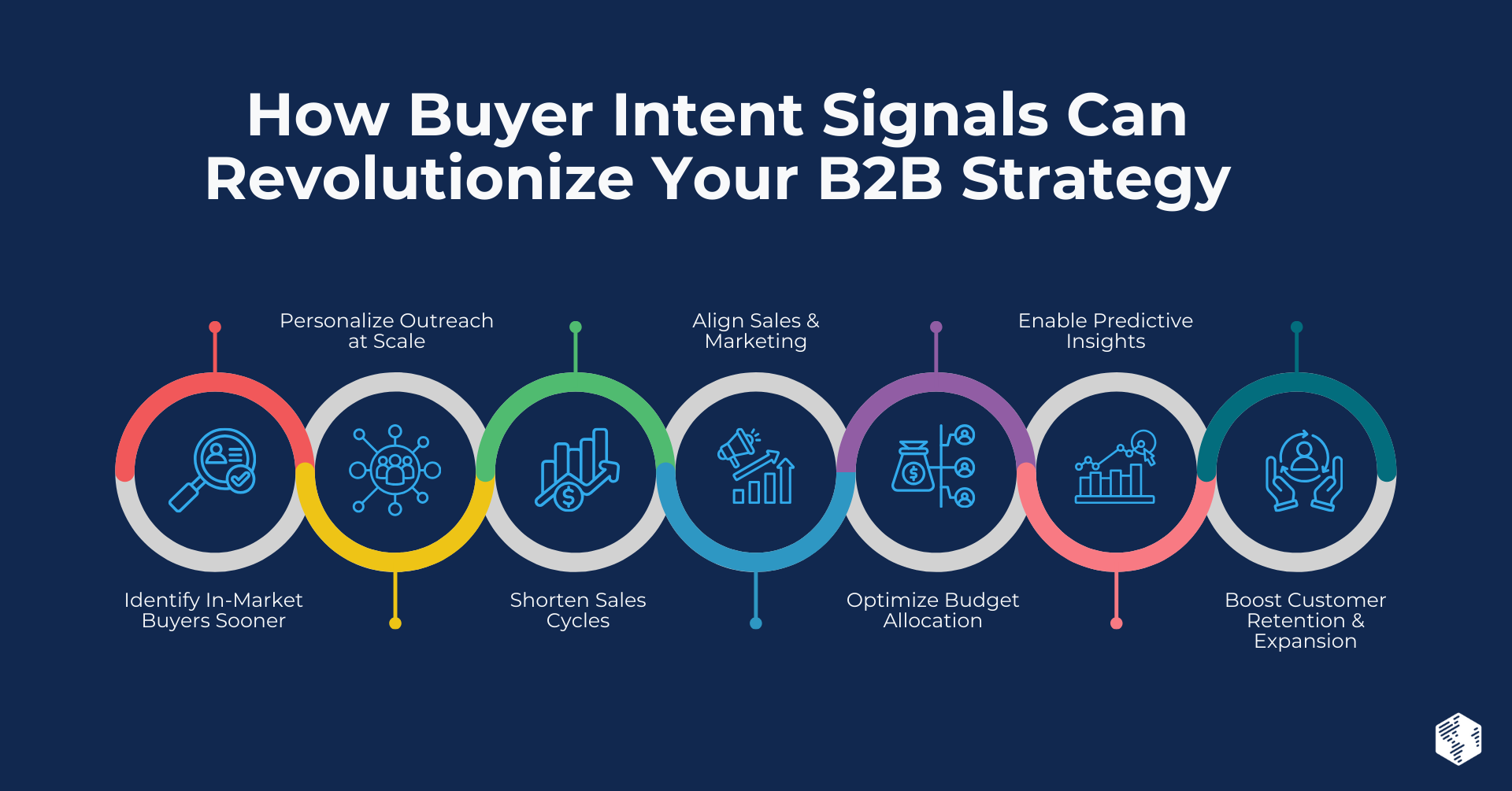
When Nexflo AI integrates buyer intent data into a client's marketing infrastructure, we typically see marketing spend per lead drop by 40%. But that number doesn't tell the whole story.
The real transformation happens across three dimensions:
Precision Targeting Across All Channels
Your campaigns across Google, Meta, and programmatic platforms stop being broad awareness plays and become surgical strikes. You're not trying to create demand from scratch—you're intercepting demand that already exists. Your display ads reach people who were just reading about solutions like yours. Your search campaigns capture buyers who are actively comparing options. Your social campaigns connect with decision-makers who are in active buying cycles.
Sales and Marketing Alignment
When your CRM fills up with leads who are actually in-market, everything downstream improves. Sales stops complaining about lead quality because they're having real conversations with real prospects. Follow-up rates increase because prospects are expecting outreach. Pipeline velocity accelerates because you've eliminated the lengthy "not ready yet" stage that kills so many opportunities.
Your marketing automation sequences become relevant instead of annoying. You're nurturing people who are moving toward a decision, not trying to manufacture interest where none exists.
Resource Allocation That Actually Makes Sense
Perhaps most importantly, you stop wasting budget on the 80% of your target market that isn't ready to buy. Those resources can be redeployed to capture more in-market demand, test new channels, or improve conversion rates among active buyers.
Your team stops spinning its wheels on unqualified leads and focuses on the opportunities that actually have potential. Campaign optimization becomes about improving conversion among ready buyers, not trying to push uninterested prospects through the funnel.
The Integration Challenge
Here's where most companies stumble. Buyer intent data is powerful, but only if it actually flows into your existing systems and workflows. Too many organizations buy intent data and then struggle to operationalize it.
The data sits in a dashboard that a few people check occasionally. It doesn't integrate with your CRM. Your ad platforms can't access it for targeting. Your marketing automation doesn't trigger based on intent signals. Your sales team doesn't see intent scores when they're prioritizing outreach.
This is why the full integration of intent data with your CRM and outreach systems is crucial. When intent signals automatically update records in Salesforce or HubSpot, when your advertising platforms receive intent-based audience segments in real-time, when your sales sequences trigger based on buying stage—that's when the magic happens.
The goal isn't to add another data source to your stack. It's to rewire your entire go-to-market engine around actual buying intent.
From Guesswork to Intelligence
The B2B buying journey has fundamentally changed. Buyers do the majority of their research independently before ever talking to sales. They're consuming content, comparing options, and building requirements long before they fill out your contact form.
Traditional marketing strategies treat this reality as a challenge to overcome. If buyers are doing their research independently, we need to work harder to break through, create more content, run more campaigns, generate more touches.
Buyer intent data treats this reality as an opportunity to exploit. If buyers are researching independently, we can identify exactly who those buyers are and reach them when they're most receptive to our message.
This isn't about working harder. It's about working smarter. It's about aligning your entire marketing and sales operation around the people who are actually ready to have a conversation.
The companies that figure this out first don't just improve their marketing efficiency by 40%. They fundamentally transform their growth trajectory. They capture market share while competitors waste budget on unqualified traffic. They build sales pipelines full of real opportunities instead of wishful thinking.
Ready to Stop Wasting Your Marketing Budget?
If you're tired of spending money to reach people who aren't ready to buy, it's time to rethink your approach. Buyer intent data isn't a nice-to-have anymore—it's table stakes for efficient B2B growth.
Book a free marketing audit to see where your budget is leaking and how intent-driven targeting could transform your results. We'll analyze your current spend, identify opportunities for improvement, and show you exactly how much you could save while generating better leads.
The question isn't whether buyer intent data works. The question is how much longer you can afford to market without it.